
Sep 27, 2026Compliance & Logistics
EU Packaging Rules (PPWR) and Homeware: A Practical Checklist for Buyers
PPWR is now in force in the EU. What the packaging rules change for storage baskets, laundry hampers and pet beds, plus 5 questions to ask your supplier.

Packaging has quietly become a product decision.
The EU Packaging and Packaging Waste Regulation — Regulation (EU) 2025/40, better known as PPWR — entered into force in February 2025 and moved into its general application stage in August 2026. It replaces a packaging directive that had been in place for close to thirty years, and it applies across materials and across channels: container loads, palletised retail shipments, and parcels going straight to a consumer's door.
For storage baskets, laundry hampers and pet beds, the headline is not the hard part. The hard part is the handful of details that decide whether an order moves smoothly — what the packaging is made of, how much empty space is left inside the carton, whether the material can be identified and sorted in the market where it lands, and whether the paperwork exists when someone asks for it.
This article is written for buyers rather than for lawyers. Below is what tends to change in practice, what it means for the three product families we work with most, and five questions worth asking before production starts.
One note before we go further: this is a practical starting point, not legal advice. PPWR requirements phase in between 2025 and 2040, and implementation details differ between member states. Always confirm the specifics against the official regulation text, and with your importer or compliance adviser.
What PPWR Changes in Practice
Three things are worth internalising before the detail.
It covers packaging at every level. Sales packaging that reaches the shopper, grouped packaging that bundles units together, and transport packaging that protects the load are all in scope. E-commerce packaging counts as packaging as well, which matters if you sell online or ship direct to consumers rather than to a distribution centre.
The obligations sit with whoever places the packaging on the EU market. If you import or distribute into the EU, that normally means you — not the supplier who shipped the goods. A supplier can provide information, materials data and documentation. The compliance decision is yours. This is the single most useful thing to understand, because it changes what you should be asking for, and when.
Requirements arrive in stages, not all at once. Broadly speaking, substance limits and the first labelling obligations come first, recyclability and recycled-content thresholds phase in from 2030, and the tighter recyclability grades follow later in the decade. The full curve runs to 2040.
So "are we compliant?" is not quite the right question in 2026. A better one is: which requirement lands on which order, and what do we need in place before it does?
The five areas below are the ones that show up in day-to-day homeware sourcing — the ones that will change a carton specification, a unit cost, or a shipping plan.
The Five Details That Decide an Order
1. Packaging materials, chosen on purpose rather than by default.
Most homeware packaging is inherited, not designed. A basket has been shipped in the same box and the same plastic inner bag for years because it works. Under a recyclability and material-identification lens, "it works" is no longer the only test. Paper, board, and moulded fibre components are usually easier to identify and separate. Mixed-material laminates, coatings, and dark plastics are harder, and harder to explain to a retailer who is now asking their suppliers the same question.
2. Empty space, which is a cost as much as a rule.
Void space gets attention because the regulation limits it for grouped, transport and e-commerce packaging. But the commercial argument is stronger than the regulatory one: every cubic centimetre of air inside a carton is a cubic centimetre you pay to ship. A carton that is 20% air is, in freight terms, a 20% discount thrown away. Reducing empty space is one of the rare changes that helps compliance and the landed cost at the same time.
3. Recyclability and material identification.
The direction of travel is from "theoretically recyclable" to "recyclable in practice, and identifiable as such." For buyers this translates into two questions you can ask today: can the material be collected and sorted in the country where it is sold, and can a person looking at the package tell what it is made of? Material marks, clear separation of components, and avoiding glued-together mixed materials all move in the right direction without redesigning the product.
4. Traceable information and technical documentation.
Increasingly, a package needs to be describable. Which material, which component, what weight, and who placed it on the market. In practice this means keeping a packaging specification per SKU: component list, material, weight, recyclability note, and supplier confirmation. It is filing work, not engineering work — and it is the part most buyers are least prepared for, because until now nobody asked for it.
5. Reviewing packaging early, not after production.
The cheapest moment to change packaging is before the order is confirmed. The most expensive is when the goods are packed and waiting. Raising packaging at the quotation stage — not at the inspection stage — is the habit that makes everything else on this list affordable.
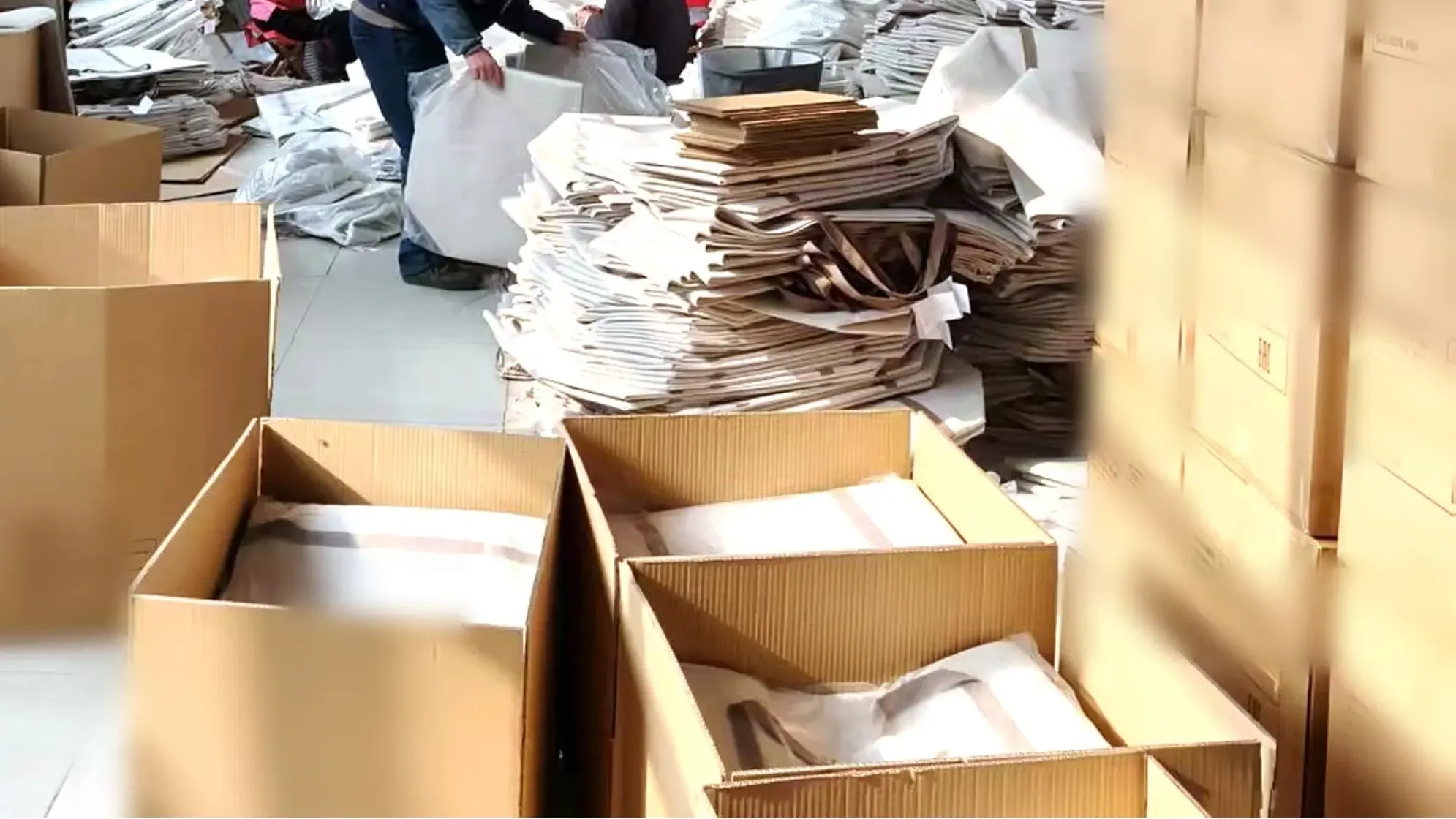
What This Means for Storage Baskets, Laundry Hampers and Pet Beds
These three families behave quite differently in a carton, and the differences are worth knowing before you write a packaging requirement.
Woven storage baskets. Rigid shapes, sensitive to pressure, and often shipped nested or stacked. Two decisions dominate. First, whether the basket arrives assembled or flat with a structural insert; assembled baskets hold shape better but consume far more volume. Second, how much internal support is needed to stop the weave deforming under a stack. Paper-based corner protection and moulded fibre inserts are usually easier to identify and separate than foam or plastic edge pieces.
Laundry hampers. These are the volume story in the range. Fabric and felt hampers fold, which means a carton can hold several times more units than an assembled equivalent for the same footprint — a difference that shows up directly in your container utilisation. Frames, handles and rims are the parts that resist compression, so the packaging question is usually where to reinforce rather than how much filler to add.
Pet beds. The largest and softest of the three. Vacuum compression is effective but has limits: fillings need time to recover, and a bed that arrives flat and stays flat is a customer complaint waiting to happen. The practical trade-off is between compression ratio and recovery time, and it is worth testing rather than assuming.
Across all three, e-commerce changes the brief. A parcel that ships straight to a consumer is handled individually and often travels loose with other parcels, so it needs its own structural protection and its own identification. A carton designed only for palletised retail distribution frequently does not meet that brief — and the gap usually shows up as damage rates, not as a compliance finding.
Need samples before you commit? Sampling takes 7–10 days after design confirmation, and we can send packaging options alongside the product sample. → start a custom project
Five Questions to Ask Your Supplier Before Production
These are the questions that reliably surface the useful information. Ask them at quotation stage, in writing, so the answers end up in the file.
1. What packaging will be used at each level — unit, grouped, and transport? You want a component list, not a summary. "Export carton with inner bag" hides three separate materials and three separate recyclability answers. Ask for each layer by name and material.
2. Can this packaging material actually be collected and sorted in our market? Recyclability in theory and recyclability in your market are different things. Ask what the material is, whether it carries an identification mark, and whether the supplier has seen it accepted in your country.
3. What is the empty space ratio, and can it be reduced without damaging the product? Ask for the carton dimensions and the packed product volume. If the answer is a large gap, ask what the blocker is — protection during transit, a standard carton size, or habit. Sometimes the honest answer is a standard box, which is a fair trade-off if you know about it.
4. What documentation can you provide, component by component? Ask for the packaging specification as a document you can keep per SKU: material, weight per component, and any test or material certificates the supplier holds. This is the file that answers most future questions.
5. Can the packaging be reconfigured for e-commerce direct shipping? If any part of your volume goes straight to consumers, ask this separately. The requirement is different from pallet distribution, and it is much cheaper to design in at the start than to retrofit later.
If a supplier cannot answer these, that is information too. It usually means packaging has never been specified, only repeated.
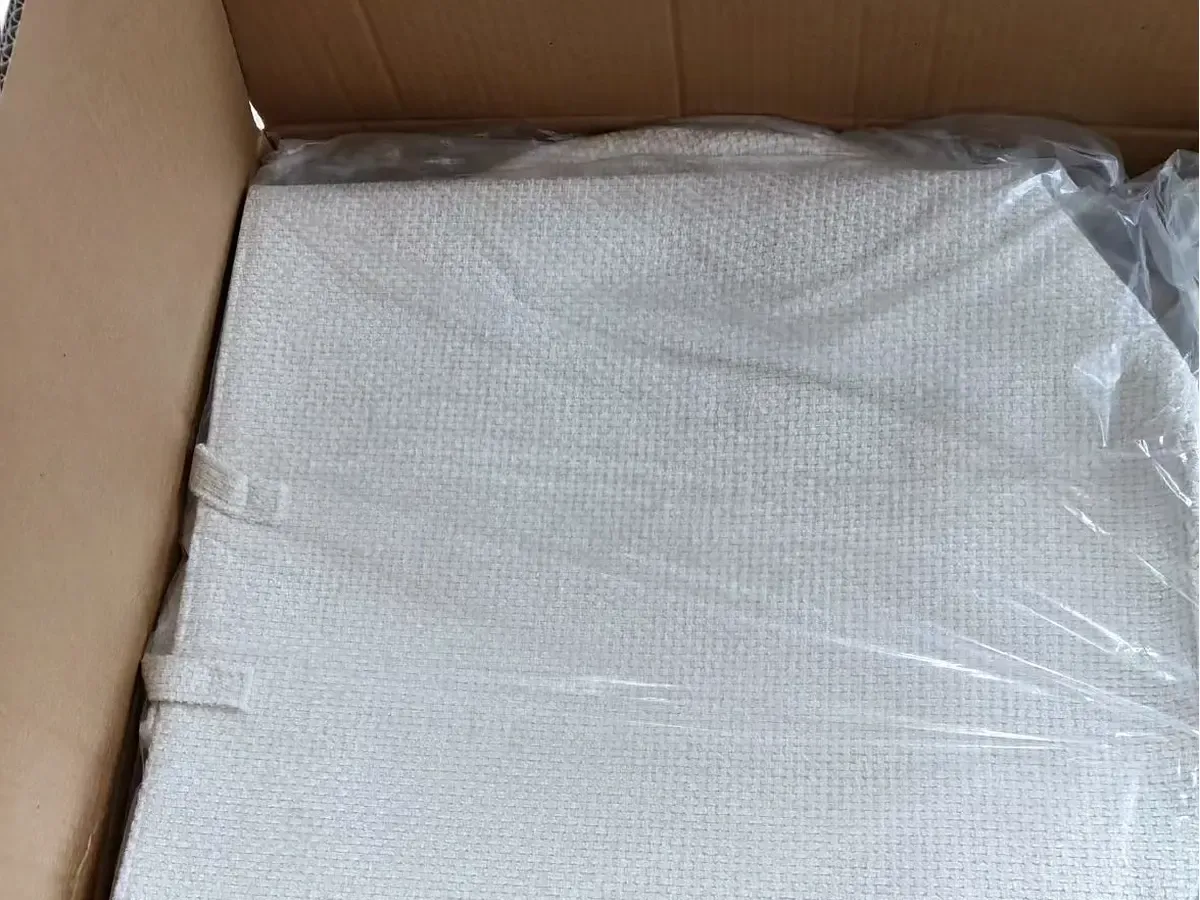
How We Handle Packaging With Buyers
We are a sourcing partner, which puts us on the specification side of this question rather than the legal side. In practice, that means four things.
Packaging is part of the quotation, not an afterthought. When you send a product brief, we ask about your target market and your channel — retail, distribution, or direct to consumer — and the packaging proposal comes back with the price, not weeks after it.
We keep a packaging specification per SKU. Component list, material, and weight, updated when the specification changes. When your retail customer sends a packaging questionnaire, you have a document to forward rather than a round of emails to run.
We flag trade-offs early. A tighter carton that saves freight but risks deformation in a stack is a decision you should make before production, not after a damage claim.
Every order ships with a pre-shipment inspection. Photos and a report before dispatch, with the packaging checked against the specification we agreed. If something does not match the file, you hear it from us before the goods move.
We work across 12 core materials — cotton rope, paper rope, seagrass, bamboo, cattail, canvas, chenille, corduroy, imitation linen, felt, PP&PE and iron wire — which means packaging changes can usually be matched to a material change rather than treated as a separate project. You can see the range on our materials page, or browse our collections for the product families these requirements apply to.
Frequently Asked Questions
Does PPWR apply to a company outside the EU?
It applies to packaging placed on the EU market, wherever the company placing it is based. If you import homeware into the EU, or sell into the EU through a distributor, the obligations generally reach you. Confirm your specific role — importer, distributor, or producer — with your compliance adviser, because the duty list differs by role.
Do we need to change the product, or only the packaging?
PPWR addresses packaging. That said, packaging decisions are often product decisions in disguise: whether a basket ships flat or assembled, whether a hamper folds, how a bed is compressed. Changing those answers is sometimes the most effective way to meet a packaging requirement, and it frequently improves freight at the same time.
What about packaging we already have in stock?
Requirements phase in over time rather than switching on at once, and stock already in the market is treated differently from new production. The practical move is to map your current packaging against the requirements that arrive next, so the transition is planned rather than reactive. Check the specific timing against the official text.
Can you provide packaging documentation for our retail customer?
Yes. We can supply a packaging specification per SKU — components, materials and weights — plus the pre-shipment inspection report for each order. If your customer has a specific questionnaire, send it over and we will complete it against the actual specification rather than a generic template.
Related products
Prefer this in one page? Ask for our twelve-point homeware sourcing checklist and we'll email it over.
Have a product idea or a target price? Send it over — we'll reply with feasibility feedback and a quote within 24 hours. → contact us
This article is a practical overview for buyers, not legal advice. PPWR requirements phase in between 2025 and 2040 and implementation details vary between member states. Confirm specifics against the official regulation text and with your importer or compliance adviser.