Quality & Craft
Why Every Basket Is Measured, Weighed and Inspected
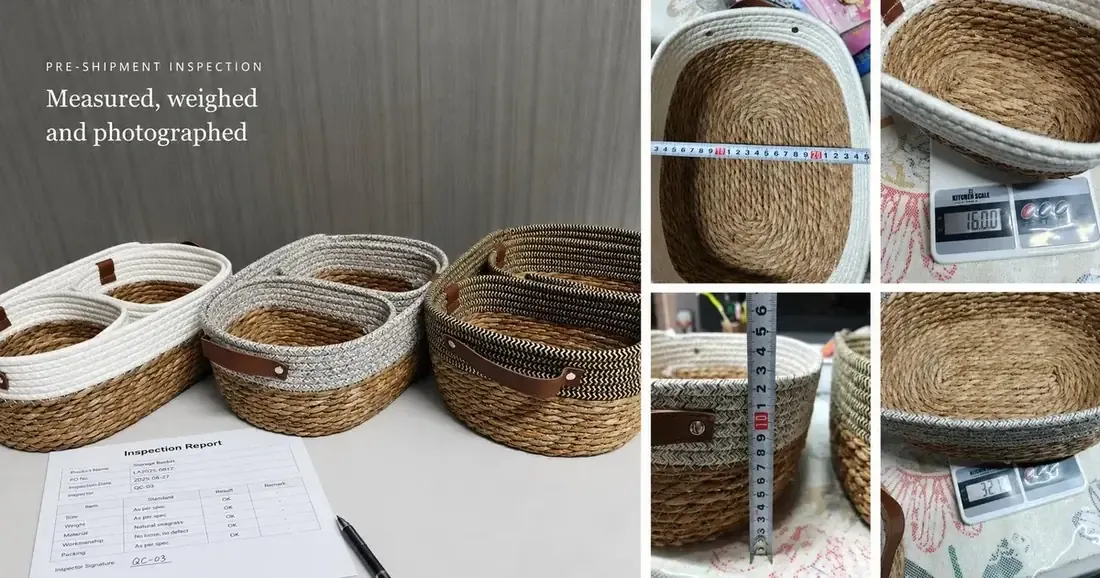
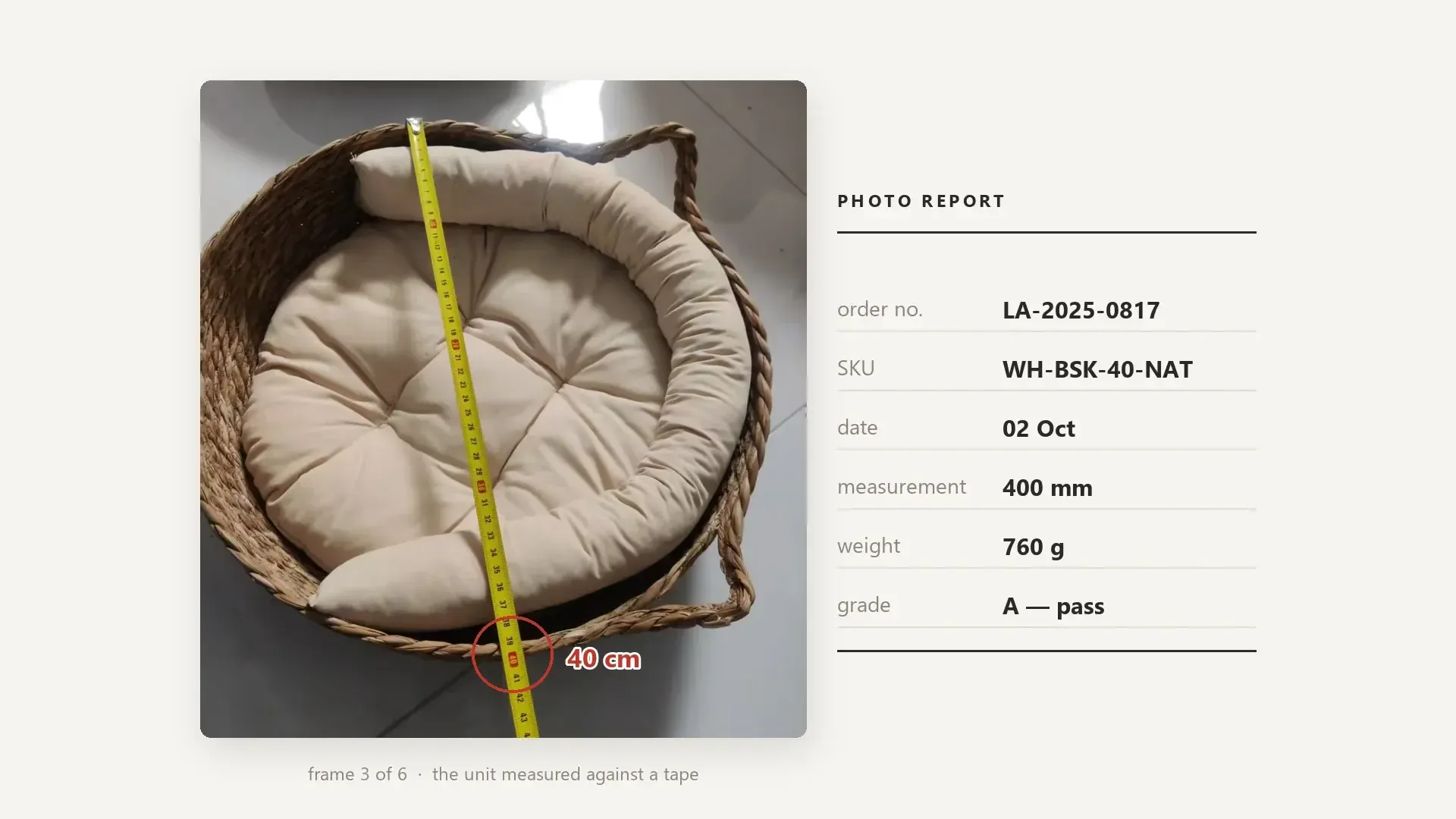
Size tolerance and weight decide whether a basket stacks, nests and fits the carton. What the two readings catch, and five checks you can run on arrival.
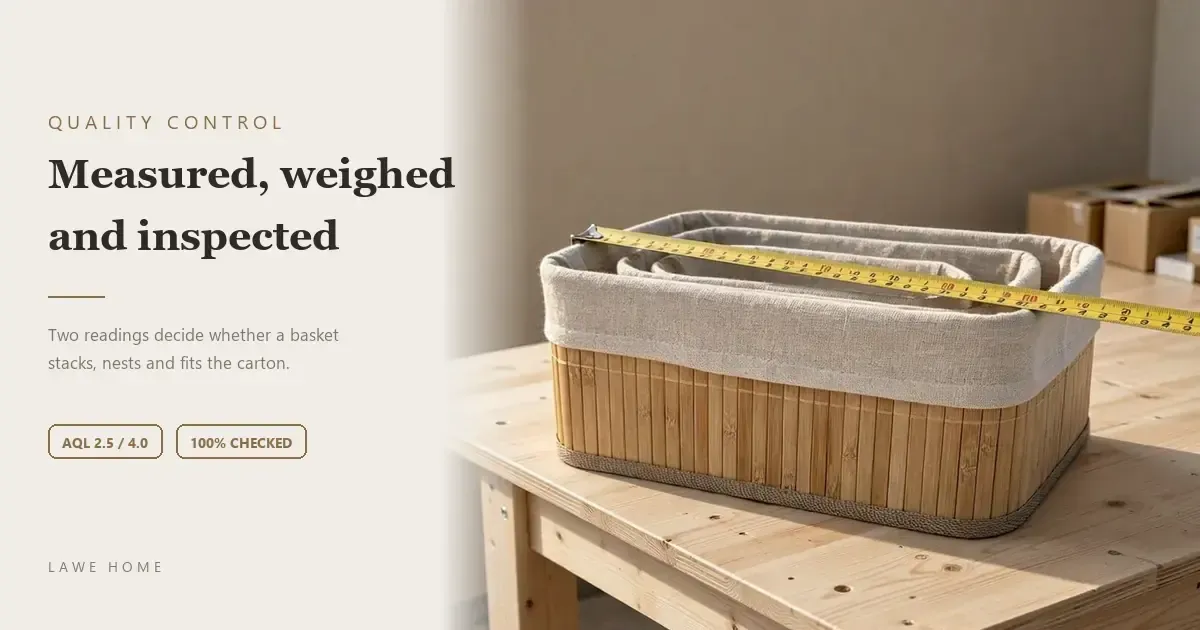
A woven basket can look perfect in a photo and still fail on a shelf.
Two numbers decide most of that: size and weight. Both are cheap to check, and both are checked on every unit before it ships. Here is what the two readings catch, and what you can check yourself on arrival.
Where a Millimetre Turns into Money
Size tolerance is not a quality term. It is a cost term, and it shows up in four places.
Shelf fit. Retail shelving has a fixed inner height and a fixed display box. A basket that runs 10 mm over the nominal size may not fit the display. It may also sit proud of the shelf edge.
Stacking. Six baskets at a nominal 30 cm should be 180 cm. Let each drift 10 mm over and the stack gains 6 cm. That is the difference between fitting a shelf bay and not.
Container. The carton is sized from the approved sample. Taller baskets mean the lid sits high, or a layer has to come out. Both cost money at the port, where nobody can fix them.
Nesting sets. A three-piece set has the tightest tolerance of anything we make. The middle size has to sit inside the large one and hold the small one. Move it 10 mm and the set stops nesting. That nesting is the only reason the customer bought it.
That is why tolerance belongs on the order, in writing, before production. "About 30 cm" is not a specification.
What the Weight Tells You
Size is visible. Weight is not, and it usually fails earlier.
Weight is compared against the approved sample for that SKU, not against an industry figure. The sample sets the band. We work to ±5% on most baskets and ±10% on larger ones, and it catches changes that no photo would show:
- a rope moving from 4.0 mm to 4.2 mm, which adds about 10% to the same basket
- looser weaving, which reads as a lighter and softer body
- less filling in a stiffened felt or fabric item
- material that was not dry before weaving
Weighing the whole carton is faster than weighing every piece, and it catches a different mistake. A carton that comes in 200 g light usually means a missing divider or a short count, not a lighter basket.
Weight moving up is not always bad. Heavier rope can be a real upgrade. But you should know it happened. Otherwise the cost moves without anyone deciding.
Need samples before you commit? Sampling takes 7–10 days after design confirmation, and the approved sample is what both readings are measured against later. → start a custom project
The Four Failures We See Most
Out of round, or a sagging base. Rope relaxes after weaving, and the shape moves. Packing too tight or stacking too high speeds it up. We catch it by loading a basket and leaving it standing for 24 hours before measuring again.
Colour difference. The most common cause is a repeat order, because the new rope comes from a different dye bath. Mixing two batches in one carton causes it too. The fix is a sealed sample per colour and the same dye lot when you reorder.
Skipped or loose stitching. Tension settings, needle wear and machine speed all show up in the seam. The joint between the body and the handle fails first. Next comes the final turn at the rim, where the machine runs slowest.
Odour. Damp material, a dye that has not settled, or a plastic bag closed while the basket is still warm. It clears with air. It should not be there on arrival, though. A retail customer notices it before anything else.
Five Checks You Can Run on Arrival
You do not need equipment for any of these, and they take about twenty minutes.
- Take three units from three different cartons and measure each one. Three from the same carton tell you nothing about the lot.
- Weigh one unit on a kitchen scale and compare the number with the weight on the inspection report. If the two differ by more than 5%, ask why.
- Press the base and the rim and let go. It should come back. A base that stays dented will stay dented on the shelf.
- Stack six and leave them for a day. A stack that leans after a day leans in a shop window as well.
- Open the bag and smell. Then leave the unit out for a few hours and smell again. A smell that goes away is packing. One that stays is material.
Write down what you find, with the carton number. A note like "carton 4, 32.4 cm against 30 cm nominal" is something a supplier can act on. "Some of them look bigger" is not.
If the goods are outside tolerance often enough to matter, the tolerance itself may be wrong for the product. Browse our collections to see the sizes and materials we hold to. Then tell us what your shelving or your carton actually allows.
Frequently Asked Questions
What tolerance should I ask for?
It depends where the basket is sold. For single-unit e-commerce parcels, ±3% or ±10 mm, whichever is larger, is usually comfortable; larger baskets get more room, ±15 mm on size and ±10% on weight. For retail shelving and nesting sets, name the window you need rather than taking the default, and be ready to accept a slightly higher unit cost.
What if my supplier has no size record?
Ask for the measurements of the last three shipments. If they cannot produce them, the size has never been specified, only repeated.
How many failures in a lot are normal?
None is the right answer. In practice, a few units held for rework in an order of a thousand is realistic. They just have to stay in the works and not ship. Failures that were never recorded are the ones that cause claims.
Related products
Tell us the tolerance your shelf or your carton allows — we'll confirm feasibility before you order. → contact us