Custom Development
Space-Saving Pet Products for Urban Retailers
Small flats change what a pet product can occupy. The three needs urban retail buys for — foldable, stackable, easy to store — and why compact still carries margin.
A pet bed that fits a living room does not fit a ten-square-metre flat. Urban retail buys against a different constraint: not how the product looks in a room, but what it does when the room needs its space back.
Three needs come up in almost every city brief we work on.
The Three Needs
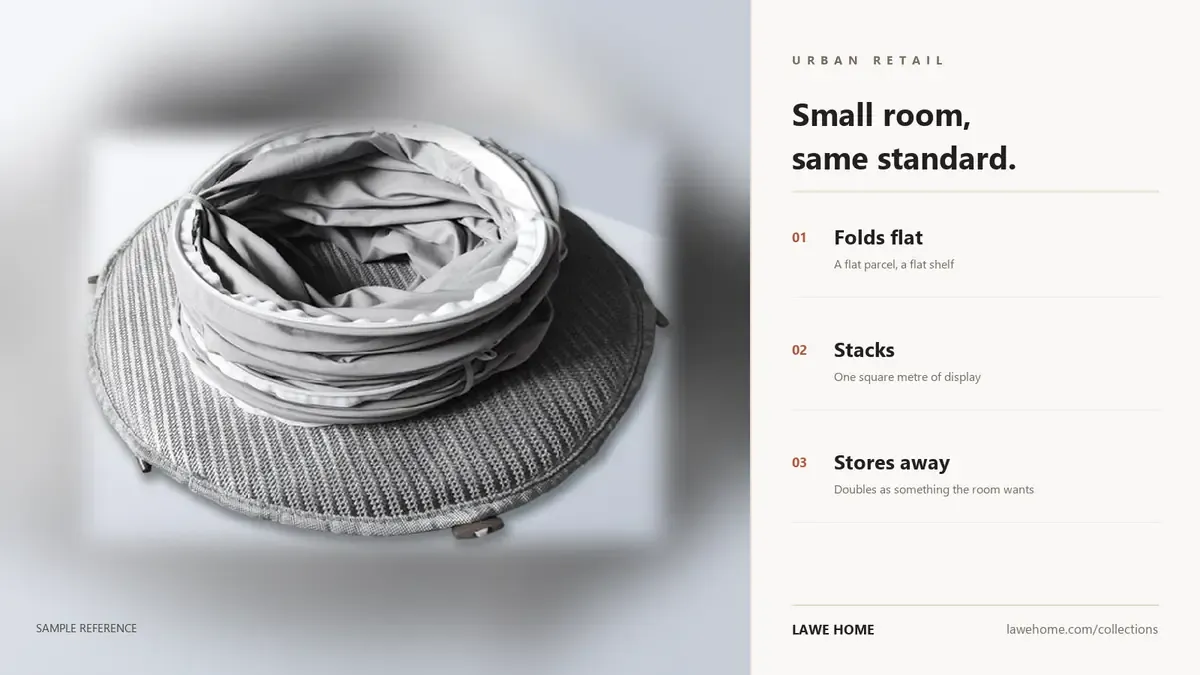
It folds flat. Delivery is the first test — a folded bed ships as a flat parcel and shelves in a stockroom. The second test is the owner's: it folds away when guests come, or when the bed moves from the sofa to the hallway. A fold point is a structure, not a hinge, and it has to survive both tests on the same sample.
It stacks. Retail floor space is the scarcest thing a city store owns. Products that stack hold a display in one square metre and survive restocking. Stackability comes from the rim geometry, so it has to be decided at the spec stage — two beds that stack in the drawing can fight each other on the table. It also matters in the stockroom: a stacked line is the difference between a one-pallet delivery and two.
It stores away. The best space-saver in this category doubles as something the room already wants: a bed that doubles as a storage box, or folds into a cushion that sits on a shelf. One product, two shelves' worth of reasons to buy it.
Colour Does Quiet Work
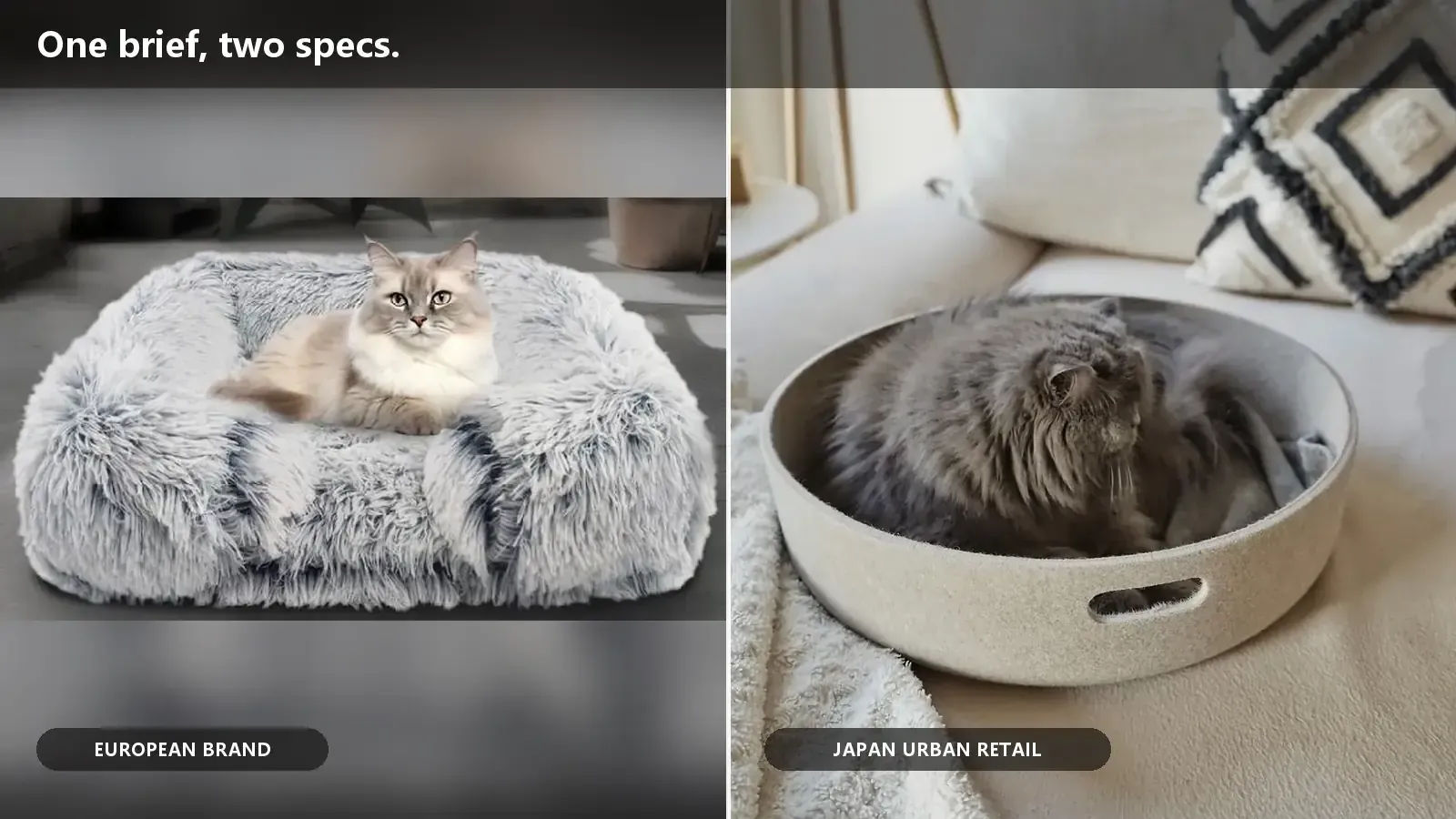
In small rooms, low-saturation colour is not a style choice — it is how a product earns its place. Muted greys, oatmeal and soft blues read as calm against cluttered floors, which is what the Japanese and other Asian urban briefs ask for first. Loud colour shrinks a room further; quiet colour lets the product stay out all day.
Compact Is Not Cheap
Small does not mean low value. A fold point costs engineering, and a bed that folds, stacks and stores carries more structure than a flat cushion in the same footprint. That structure is where the margin sits: the buyer is paying for square metres recovered, and recovered space prices far above fabric.
The positioning logic behind these specs is in our note on market positioning, and finished products are grouped in our collections.