Compliance & Logistics
LCL vs FCL for Homeware: When Consolidation Actually Pays Off
LCL is cheaper per cubic metre until handling damage and delay catch up. Where the crossover sits for homeware, and when one container is safer.
LCL looks cheaper on the quote. It stops looking cheaper once you count handling, delay and breakage.
The Four Trade-offs
Volume. LCL is priced per cubic metre, FCL per container. Below a certain volume LCL wins. Above it you are paying for air.
Handling. LCL cargo is unpacked and reloaded at a consolidation warehouse, then again at destination. Every extra touch is a chance to crush a basket rim.
Transit time. A consolidated box waits for other consignments to fill it. Add one to three weeks, sometimes more.
Unit cost. LCL's per-CBM rate is higher than the implied FCL rate. The saving comes from paying only for the space you use.
Where the Crossover Sits
Working rules for homeware:
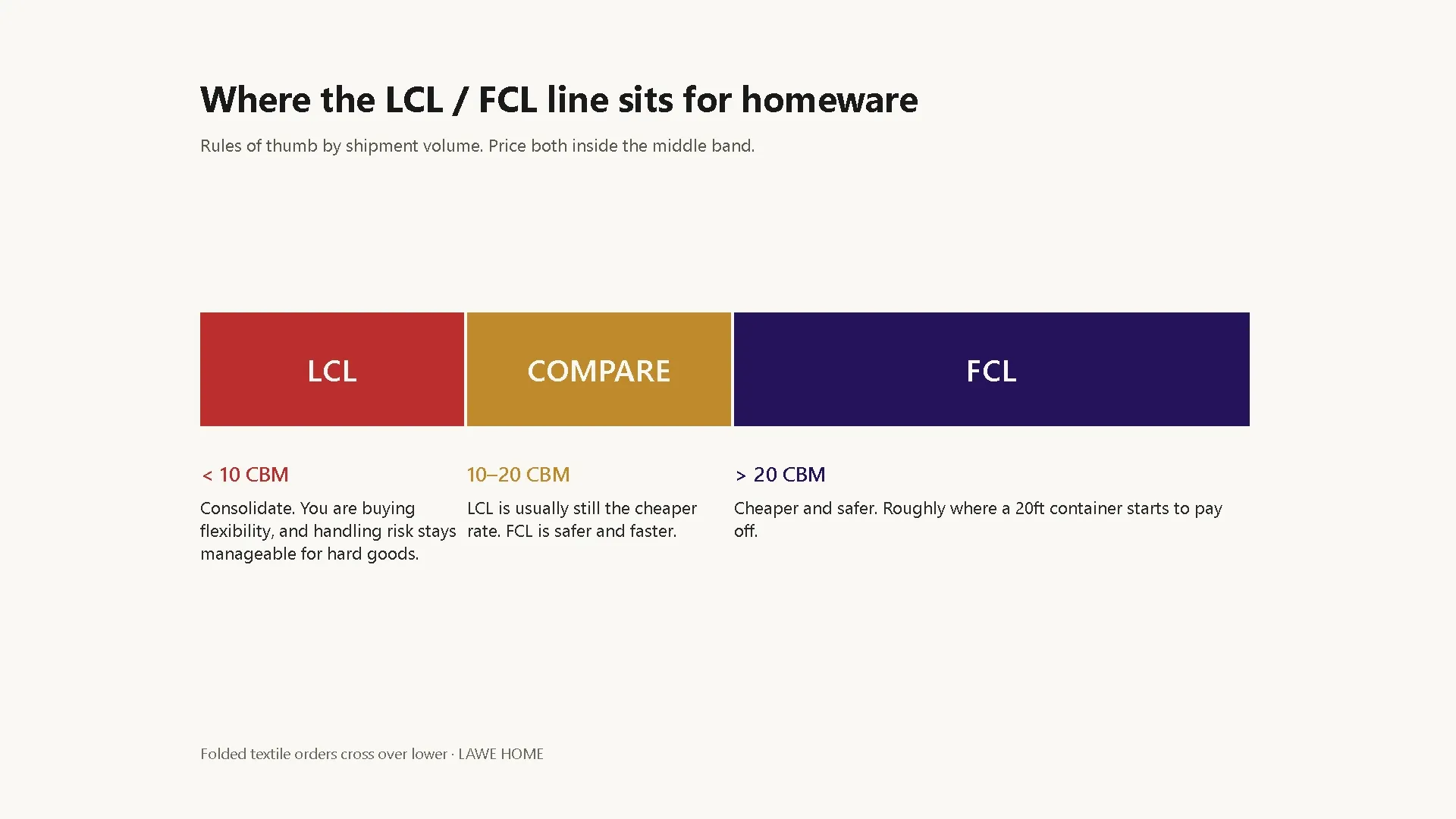
- Under about 10 cubic metres. LCL. You are buying flexibility, and handling risk stays manageable for hard goods.
- 10 to 20 cubic metres. Price both. LCL is usually still cheaper on freight; FCL is safer and faster.
- Above about 20 cubic metres. FCL. It is cheaper on freight and safer, and about where a 20ft container starts to make sense.
For folded textiles the band shifts. Felt and canvas crush less in LCL handling, so 12 CBM of felt can still travel LCL when 12 CBM of rattan should not.
What Consolidation Also Does
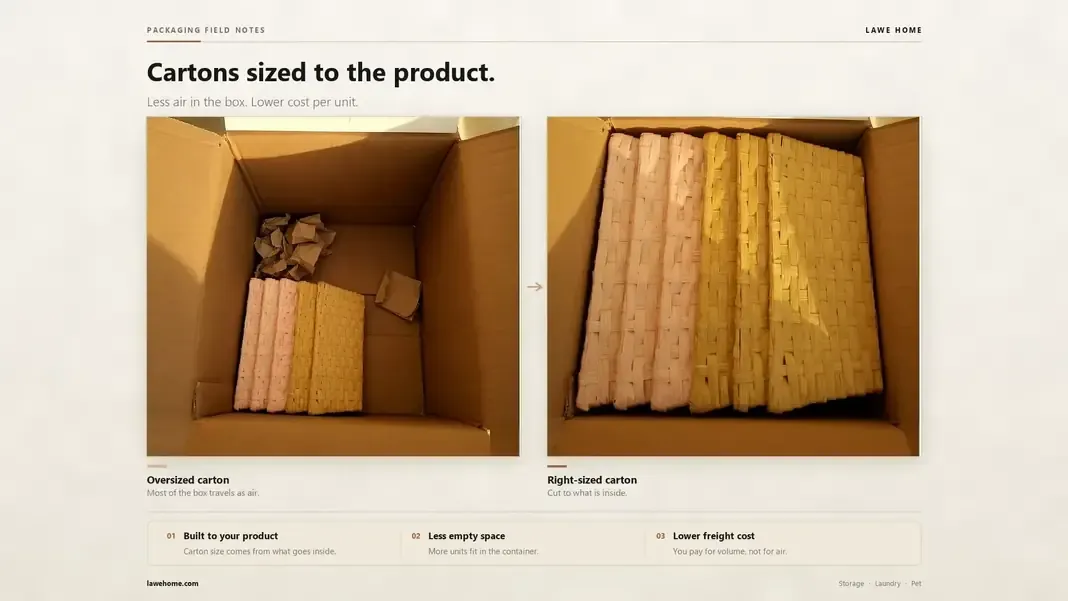
Fewer shipments mean fewer bookings, fewer documents and less handling. Emissions fall for the same reason: one consolidated load uses less space in total than three part loads carrying air.
That is not a separate environmental decision. It is the same action counted twice.
When to Take the Whole Container
Take the container when any of these is true:
- The product is fragile or hard to rework — rattan, bamboo slat, large seagrass pieces.
- A retail launch date is fixed.
- The order runs above 20 CBM.
- The destination port has a rough reputation for LCL handling.
On one European order we moved a client from three LCL bookings to a single 40HQ. Damage claims stopped, and their total freight came in a few percent below the consolidated figure. The percentage was not the point. The intact delivery was.
The Short Version
Under 10 CBM, consolidate. Over 20, take the container. In between, price both and look hard at what you are shipping.
The ordering and shipping questions we get most often are answered on our FAQ page. If the material is still open, our note on container space covers how loading changes by material.